 Es Posible
It has never happened before.
Putin and Xi have met more than 40 times since 2013. Trump and Xi, eight. Trump and Putin, seven; the last one in Alaska, in August 2025. All three at the same table, zero. The White House confirmed it on November 13: it will take place on the sidelines of the APEC summit, there will be no one-on-one between Trump and Putin, and there will be one between Trump and Xi.
I am writing this on my way to Shenzhen, and there is one fact I cannot get out of my head.
The idea did not come from Washington or from Beijing. Putin proposed it. On October 9 he called Trump, and two things came out of that call: the deal for Russia to sell diesel to the world and the proposal to sit down with Xi. Moscow raised it with Beijing through diplomatic channels. China answered that it would not object if Trump agreed. Of the three, the host was the least convinced.
The weakest man at the table is the one who called it.
To me, that is the first clue to what this meeting is for.
Officially there are two topics: warheads and Iran. Trump wants to talk about cutting nuclear weapons and about the Iran war. His own team says it expects no agreement and calls it "the first conversation".
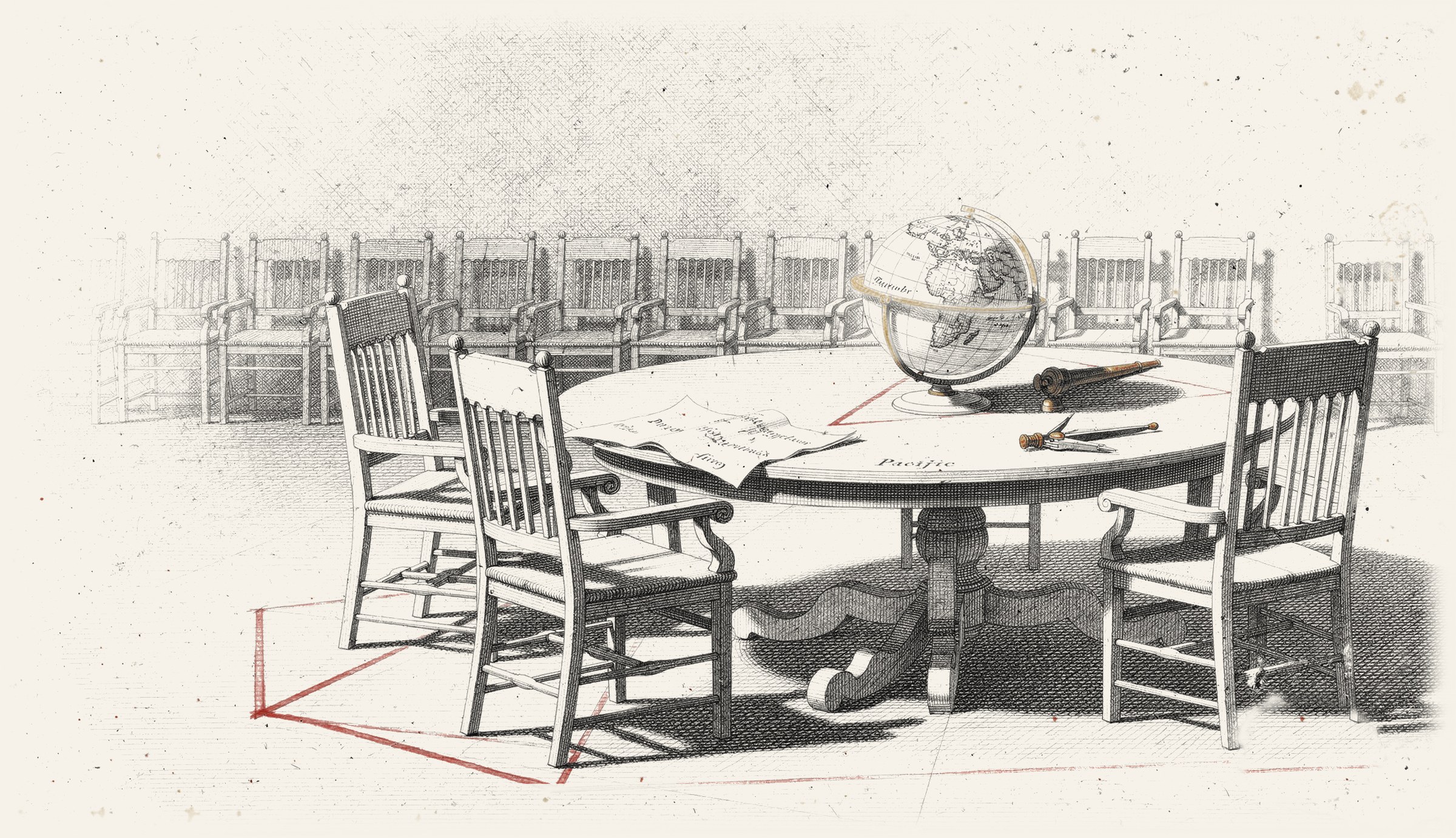
So the photo is the result. Three chairs, no signed paper, and the whole world watching who was not invited.
And there is one topic each side tells differently. Washington says Ukraine is off the table. Yuri Ushakov, the Kremlin aide, said on November 12 that Putin and Trump will keep negotiating an end to the war in Shenzhen. It is the same meeting, told two ways. Someone is not saying everything, and Zelensky has already warned that he fears a deal behind Kyiv's back.
Eight chairs were left against the wall: Ukraine, Europe, Japan, South Korea, Taiwan, India, Brazil and Mexico. All of them will be discussed. None of them gets a seat. South Korea's foreign minister, Cho Hyun, asked to avoid a "second Yalta". The Kremlin rejected the comparison: it says nothing agreed in Shenzhen can be imposed on anyone.
Two of those chairs matter most to me, Brazil's and Mexico's. And one question almost nobody is asking: how did Trump end up dealing with the two owners of BRICS while he punishes their partners.